AI Study Hacks Checklist: Printable & Digital Planner
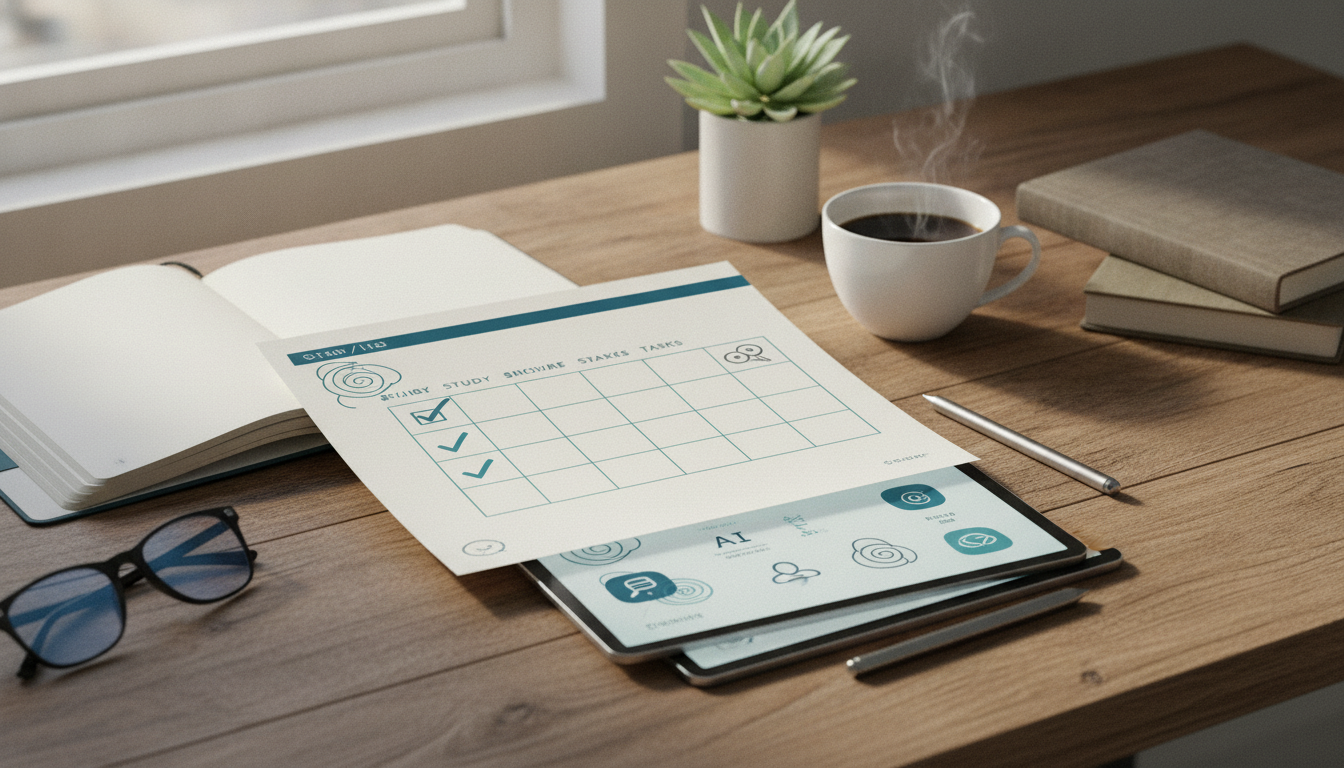
AI-Powered Study Hacks Checklist: A Printable & Digital Study Planner for Smarter Learning
A simple checklist can turn scattered effort into consistent progress. Pair that structure with AI and the result is a repeatable study system: clearer goals, faster comprehension, and better recall. The key is using AI for specific, testable outputs—then doing the learning work yourself through retrieval, practice, and review.
What AI-Assisted Studying Looks Like Day to Day
Think of AI as a study partner with three jobs: planning (what to do), practice (how to drill it), and feedback (what to fix next). The most useful AI outputs are short and checkable—questions, outlines, flashcards, error explanations—not long essays that feel productive but don’t build memory.
AI works best as a coach, not a replacement. Learning improves when you actively retrieve information, explain it in your own words, and apply it to new problems. Start with guardrails before you ask for help: define the assignment scope, what resources are allowed, and what “done” means (for example: “I can score 80%+ on a mixed quiz without notes”).
Set Up a Weekly Plan That Doesn’t Collapse Midweek
Pick a realistic weekly target—chapters, problem sets, essays, lab prep—then split it into 30–60 minute blocks. Build a “minimum viable plan” for busy days: the smallest set of tasks that still moves grades forward (like one problem set section + a 10-minute recall review). Then schedule two review loops: a quick same-day recap and a cumulative weekly review to prevent forgetting.
AI can turn a syllabus into a calendar by mapping deadlines, topics, practice sessions, and buffer days. Add friction reducers that make starting easier: a default location, a starting ritual (open planner, set timer, one “warm-up” question), and a distraction plan (phone rules and blockers).
Weekly AI Study Plan: Inputs → AI Output → What You Do
| Study need | What to provide to AI | AI output to request | Student action (non-negotiable) |
|---|---|---|---|
| Plan the week | Syllabus topics + deadlines + available hours | Weekly schedule with 45-minute blocks + 10-minute breaks | Put blocks on calendar; keep 1–2 buffer blocks |
| Understand a chapter | Chapter headings + learning objectives | One-page outline + 10 key terms with plain-language definitions | Read with outline; annotate where confused |
| Practice problems | Problem types + examples + where mistakes happen | Mixed practice set + step-by-step solution checks | Attempt first without help; compare to solution check |
| Prepare for a quiz | Teacher notes + past quiz format | Mini quiz (10–15 items) + answer key + explanations | Take timed; log errors; redo missed items |
| Write an essay | Prompt + rubric + sources | Thesis options + outline + counterarguments + checklist | Draft; verify citations; revise using rubric |
Use AI to Improve Comprehension (Without Getting Tricked by Confident Errors)
To learn faster, ask for layered explanations: “Explain like I’m new,” then “Explain like I’m taking the exam,” then “Give one tricky example.” This forces the concept to show up in multiple forms—simple, exam-ready, and edge-case.
Request misconception checks: “List common mistakes students make on this topic and how to avoid them.” Turn your notes into a concept map: definitions, relationships, formulas, and “when to use” rules. Then verify against course materials—textbook headings, lecture slides, required definitions—and confirm anything grade-critical (formulas, dates, citations) using authoritative sources or instructor materials.
For evidence-based learning tactics, see the American Psychological Association’s overview of the testing effect (retrieval practice) and Harvard’s six strategies for effective learning.
Turn Notes Into Active Recall (Flashcards, Quizzes, and Teach-Backs)
Passive notes don’t become memory until you turn them into retrieval prompts: “What is…?”, “Why does…?”, “Compare/contrast…”, “Solve…”. Ask AI to generate spaced repetition sets with easy/medium/hard cards and a short daily review queue.
Write Better Papers With AI as a Drafting Assistant (Not a Shortcut)
Protect academic integrity by writing the core content yourself, then using AI to refine clarity, grammar, and organization. Citations and quotes must be verified in the original sources; don’t rely on generated references. Finish with a rubric-based self-check so every criterion has visible evidence in the draft. For additional study habits that support writing and retention, Cornell’s study tips and strategies are a solid reference.
A Checklist Workflow That Keeps Momentum
Using the AI-Powered Study Hacks Printable & Digital Checklist
If you want a ready-to-use version, use the AI-Powered Study Hacks checklist (printable + digital) to keep your study loop consistent across classes.
Study-Friendly Extras That Support the Habit
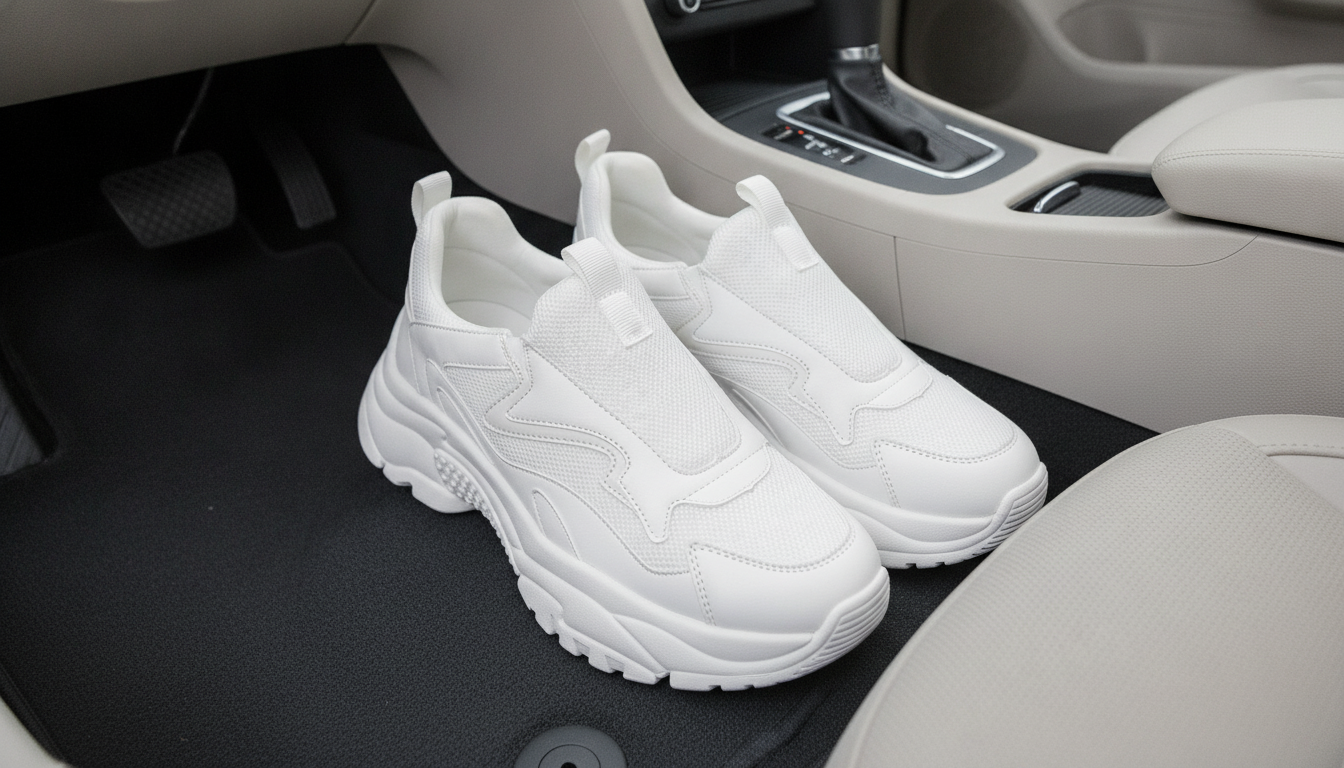
Small environmental upgrades can reduce “start-up friction” and help the checklist stick. If you commute or study in multiple spots, a reliable carry option keeps materials in one place, like the Calvin Klein Men’s Black Printed Shoulder Bag. And if you’re moving between classes, library, and study groups, comfortable daily footwear can make long days easier, such as Adidas Men’s Suede Sneakers.
FAQ
Which study tasks benefit most from AI?
Planning your week, generating practice questions, getting alternate explanations, converting notes into quizzes/flashcards, and improving clarity with feedback tend to be the biggest wins. Retrieval practice and verifying important details against course materials still matter most.
How can AI be used without harming academic integrity?
Use AI for outlines, study questions, clarity edits, and rubric checks, then write and submit your own work according to course policies. Always verify citations and quotes in the original sources.
What’s the best way to use a study checklist consistently?
Keep the routine short: pick 1–3 tasks, start one focused block, and end by choosing the next first step. Place the checklist where you’ll see it daily and do a quick weekly review to keep the plan realistic.









Leave a comment