Editable AI Fitness Workbook: Simple Plans for Beginners
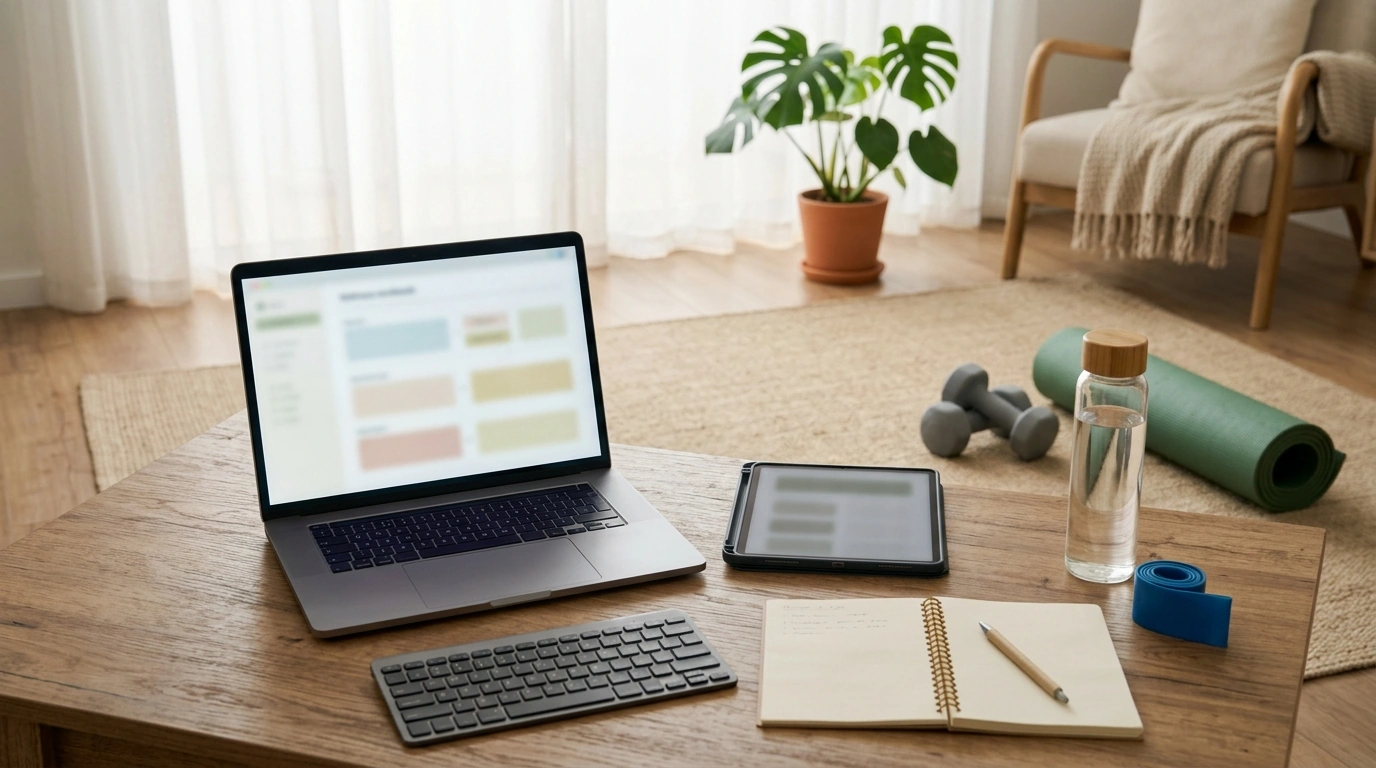
Beginner-Friendly Fitness Planning With an Editable AI Workbook
Starting a workout routine is easier when the daily decisions are simplified: what to do today, how hard to go, how to progress, and how to stay consistent without feeling overwhelmed. An editable digital wellness workbook can turn scattered motivation into a repeatable system—especially for beginners who want quick, clear workout ideas and a realistic way to plan sessions, weekly schedules, and small progression steps using AI tools.
The goal isn’t to create a “perfect” program. It’s to build a plan you can actually follow with the time, space, and equipment you have—while keeping intensity conservative, technique-focused, and easy to adjust as your body adapts.
What This Digital Workbook Helps a Beginner Do
- Turn basic inputs (goal, schedule, current activity level, available equipment, and any limitations) into simple workout options that feel doable.
- Create repeatable weekly routines (2–5 days/week) with warm-ups, main work, and cool-downs that fit common beginner constraints.
- Adjust difficulty with clear “make it easier / make it harder” swaps instead of guessing.
- Build consistency by planning around energy levels, busy weeks, and low-motivation days using short fallback sessions.
- Track what was done and make small improvements week to week without rewriting everything.
Who It’s Best For (and When to Pause and Get Medical Advice)
- Best for: true beginners, returning exercisers, busy schedules, at-home training, and anyone who wants structured ideas without complex programming.
- Works well for: strength basics, low-impact cardio, mobility, and general fitness habits.
- Not a replacement for medical care: anyone with chest pain, dizziness, uncontrolled blood pressure, recent surgery, or a condition that affects exercise tolerance should get clinician guidance before starting.
- Pain rule: discomfort from effort is normal; sharp pain, joint pain that worsens, or symptoms that linger should trigger a stop and reassessment.
- If unsure, add “low-impact” and “beginner technique focus” constraints and keep intensity conservative.
For general activity targets and safety guidance, review the CDC Physical Activity Guidelines and the NIH/NHLBI tips for getting active safely.
How to Use the Editable AI-Ready Templates in 10 Minutes
- Step 1: Choose a goal (energy, strength, fat loss support, mobility, posture, or general health) and a weekly schedule you can keep for 4 weeks.
- Step 2: List constraints: available equipment (none, bands, dumbbells), space, time per session, and any movements to avoid.
- Step 3: Ask the AI tool for a 2–4 week beginner plan using your constraints, with clear exercise descriptions and rest times.
- Step 4: Request options: at least two substitutions per exercise (e.g., knee-friendly, no-equipment, or easier version).
- Step 5: Paste the output into the workbook, edit wording to match your style, and keep only what feels realistic.
- Step 6: Add a simple tracking line: date, session completed (Y/N), effort level 1–10, and one note.
- Step 7: End each week by asking for a small progression based on completion rate (example: “if I completed 2/3 sessions, keep the same; if 3/3, add 1 set or 2 reps”).
What’s Inside: Planning Blocks That Keep Workouts Simple
- Quick-start requests to generate: full-body beginner sessions, upper/lower splits, low-impact cardio days, and mobility-only days.
- A warm-up builder that scales to 3, 5, or 8 minutes depending on time available.
- A movement library approach: squat pattern, hinge pattern, push, pull, carry/core—so workouts stay balanced.
- Progression helpers that favor small increases (reps, sets, tempo, or rest) instead of big jumps in weight or volume.
- Recovery and habit add-ons: steps goals, gentle stretching, sleep routine check-ins, and hydration reminders.
Example Weekly Structure Options for Beginners
| Schedule | Best for | What it looks like |
|---|---|---|
| 2 days/week | Very busy weeks, true beginners | 2 full-body sessions + optional 1 short walk/mobility day |
| 3 days/week | Most beginners | Full-body A / Full-body B / Low-impact cardio + core |
| 4 days/week | Those who enjoy routine | Upper / Lower / Upper / Lower with built-in easy day options |
| 5 days/week | Habit building, lighter sessions | 3 strength days + 2 low-intensity movement days (walk, bike, mobility) |
Customization Ideas: Make the Plan Fit Your Life
For a simple overview of balancing cardio and strength in a beginner plan, the ACSM recommendations are a helpful reference point.
Beginner Progress Without Burnout
Digital Download Notes and Practical Setup
Recommended Picks to Support Your Setup
- Beginner-Friendly Fitness Planning Workbook (Digital Download) — an editable option designed to help beginners build sessions, weekly schedules, and progression steps while keeping workouts simple and realistic.
- Adidas Men’s Suede Sneakers — a comfortable everyday shoe option if you’re adding walks, light cardio, or commute-to-the-gym routines.
- Calvin Klein Men’s Black Printed Shoulder Bag — a practical carry option for a water bottle, bands, notebook, and other small workout essentials.
FAQ
Does this work if there’s no gym equipment?
Yes. A beginner plan can be built around bodyweight movements, resistance bands, or even a single dumbbell, and you can request substitutions to keep exercises low-impact and space-friendly.
How many days per week should a beginner start with?
Two to three days per week is a common, sustainable starting point. Consistency matters more than volume, and an optional light movement day (like a walk or mobility session) can help build the habit without overdoing it.
Can it adjust workouts for knee, back, or shoulder sensitivity?
Yes—add your limitation as a constraint and request joint-friendly substitutions, slower tempos, and technique cues. Stop if you feel sharp pain or symptoms that worsen, and seek qualified guidance when needed.











Leave a comment