New Kitten Feeding Plan: First-Week Schedule & Tips
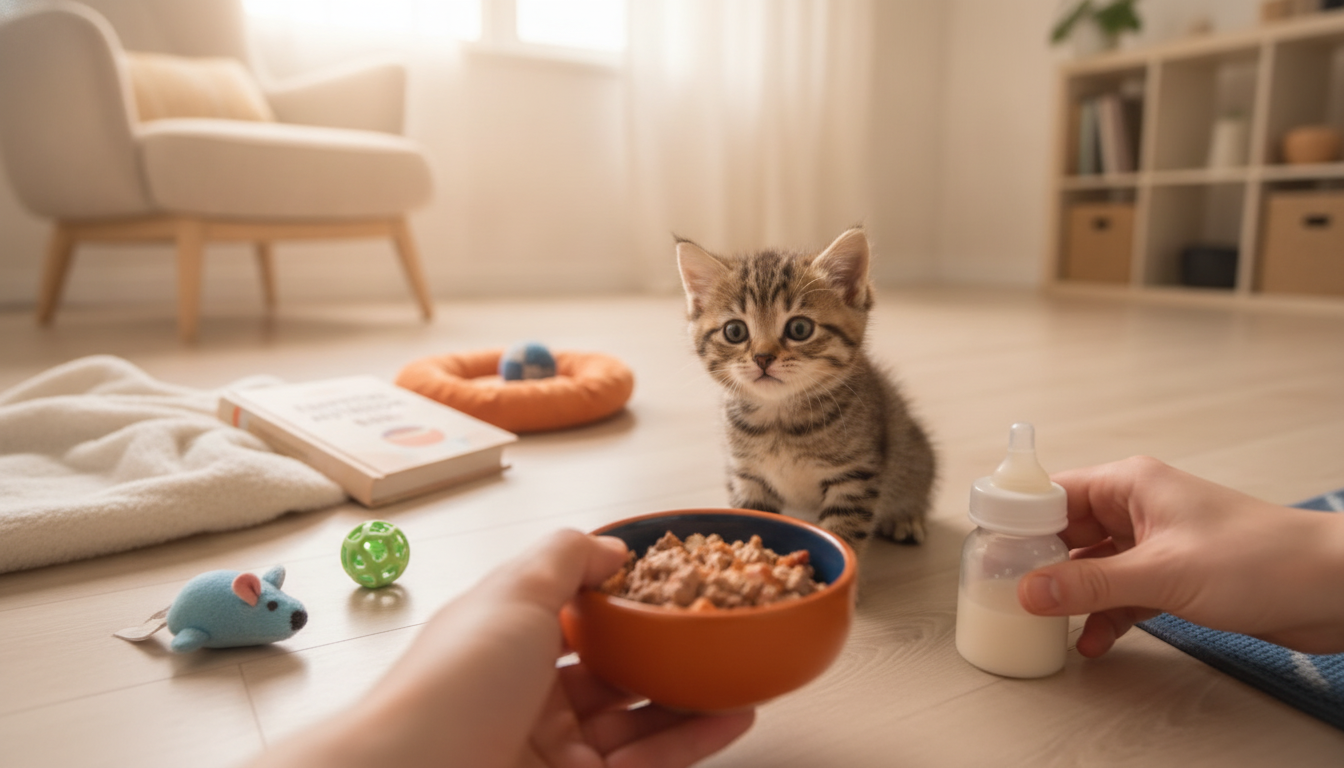
A kitten’s first weeks at home can shape lifelong eating habits, digestion, and steady growth. The goal is simple: choose a complete kitten diet, feed small frequent meals, keep water available, and transition foods gradually to avoid stomach upset. This guide lays out what to start with, how often to feed by age, and how to build calm, happy mealtimes during that crucial first week. For more guidance, see Bottle-Feeding Kittens: A Comprehensive Guide.
What “complete kitten nutrition” really means
When shopping for food, the most important words on the label are “complete and balanced” for growth (or “all life stages”). Kittens have higher protein, energy, and micronutrient needs than adult cats, so adult-only formulas often won’t support healthy development. For further reading, see A to Z of Pet Food: Kitten Nutrition.
During growth, kittens rely on key nutrients such as taurine (heart and vision), DHA (brain and vision), and the right balance of calcium and phosphorus (bones and teeth). Foods formulated for kittens are built to hit these targets consistently.
Home-cooked and raw diets can be risky during the growth stage unless they’re formulated by a veterinary nutritionist; small nutrient gaps can add up quickly in a tiny body. For deeper nutrition standards and feeding assessment guidance, see the WSAVA Global Nutrition Toolkit and the Merck Veterinary Manual overview of cat nutrition.
Treats should stay a small fraction of daily calories. In the first week, it’s often easiest to skip treats entirely (or keep them tiny) so the kitten’s stomach stays predictable while they adjust.
What food to start a new kitten on (wet, dry, or both)
Wet and dry foods can both work well as long as they’re complete for kittens. Wet food supports hydration and is often easier for small mouths—especially helpful for kittens who don’t drink much early on. Dry food is convenient, calorie-dense, and easy to measure, but it’s never a substitute for water.
A mixed approach can be the simplest routine for many homes: scheduled wet meals for hydration and enthusiasm, plus a measured amount of dry food to round out calories without guesswork. If your kitten came from a breeder, rescue, or foster, starting with the same brand and formula for 7–10 days usually reduces tummy trouble.
Starter options and when they fit best
| Option | Good for | Watch-outs | Easy starter tip |
|---|---|---|---|
| Kitten wet food (pâté or minced) | Hydration, picky eaters, smaller kittens | Can spoil if left out too long | Offer small portions; refrigerate leftovers and warm slightly to increase aroma |
| Kitten dry food (small kibble) | Convenience, easy measuring, grazing households | Overeating if free-fed; lower moisture | Measure daily allotment and divide into multiple feedings |
| Mixed wet + dry | Balanced routine, variety without chaos | Portion creep if not measured | Keep a simple schedule: wet at set times, dry as a measured top-up |
| Kitten formula milk replacer (as directed) | Under 8 weeks or kittens not fully weaned | Not for routine use in healthy weaned kittens | Use a kitten-specific replacer; avoid cow’s milk |
If you want a guided shopping-and-scheduling reference you can keep on your phone, the Feeding Your New Kitten Right | Essential Kitten Nutrition eBook is designed around those first-week decisions (what to start with, how to portion, and how to transition calmly).
Age-based feeding schedule (how often to feed)
Frequency matters because kittens have small stomachs and fast metabolisms. Many behavior “issues” (crying, frantic eating, scavenging) improve when meals are smaller and more frequent.
- Under 8 weeks: Follow veterinary guidance; some kittens still need frequent feedings and close monitoring if not with mom.
- 8–12 weeks: Aim for 4 meals per day.
- 3–6 months: Typically 3 meals per day.
- 6–12 months: Often 2 meals per day works well, though some kittens thrive on 3 smaller meals.
Try to feed at similar times daily. Predictability lowers stress, and lower stress often means steadier digestion and fewer “I’m starving” spikes between meals. For broader life-stage care context, the AAFP/AAHA Feline Life Stage Guidelines are a helpful reference.
How much to feed (without overthinking calories)
Start with the feeding guide on the label, then adjust based on the kitten in front of you. Kittens vary by breed, activity level, and health history, and the first week in a new home can temporarily change appetite.
Healthy growth usually looks like steady weight gain plus a kitten who is energetic, playful, and sleeping well. Weigh your kitten weekly using a kitchen scale (place them in a shallow box or carrier) and keep a simple log.
Switching foods safely: the 7–10 day transition
Hydration, bowls, and a calm mealtime setup
Common feeding problems and simple fixes
A simple first-week checklist for happy mealtimes
For pet-parent convenience items on busy “new kitten” errands, some households like having a compact carry option such as the Calvin Klein Men’s Black Printed Shoulder Bag, and comfortable walkable footwear like Adidas Men’s Suede Sneakers for vet trips and supply runs.
FAQ
Should a new kitten eat wet food or dry food?
Either can work if the food is complete and balanced for kittens. Wet food supports hydration and often boosts appetite, while dry is convenient and easy to measure; many homes do best with a mixed plan plus constant access to fresh water.
How often should a kitten eat each day?
Most kittens do well with about 4 meals/day at 8–12 weeks, 3 meals/day at 3–6 months, and usually 2 meals/day by 6–12 months. Individual needs vary, so adjust based on growth and your veterinarian’s guidance.
How do you switch a kitten to a new food without diarrhea?
Transition gradually over 7–10 days by mixing increasing amounts of the new food into the old. Slow down if stools soften, and contact a vet for vomiting, persistent diarrhea, blood in stool, or refusal to eat.











Leave a comment